
It starts with a world, not a slogan list
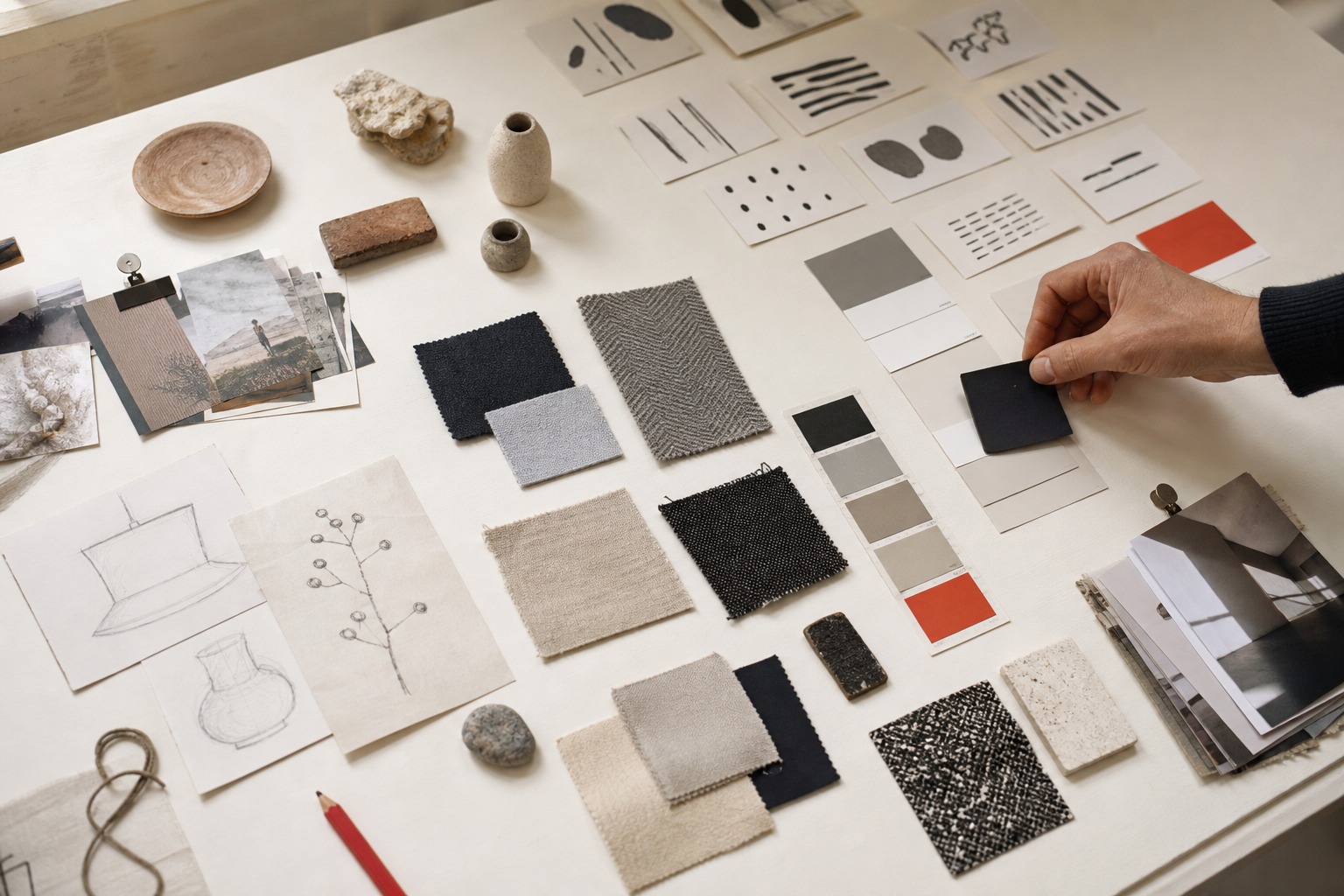
A collection needs more than a shared keyword. We start by defining the people, routines, objects, language, colors, and small truths that make an interest recognizable from the inside.
That context gives every design somewhere to come from. It also makes it easier to reject ideas that are technically relevant but emotionally generic.
Concepts need different jobs
Ten shirts that repeat the same composition are not a collection. We look for a mix: quiet type, emblematic graphics, illustrative scenes, gifts with an immediate read, and designs that reward a closer look.
The pieces should belong together without feeling like color swaps of one successful idea.
The shirt is part of the artwork
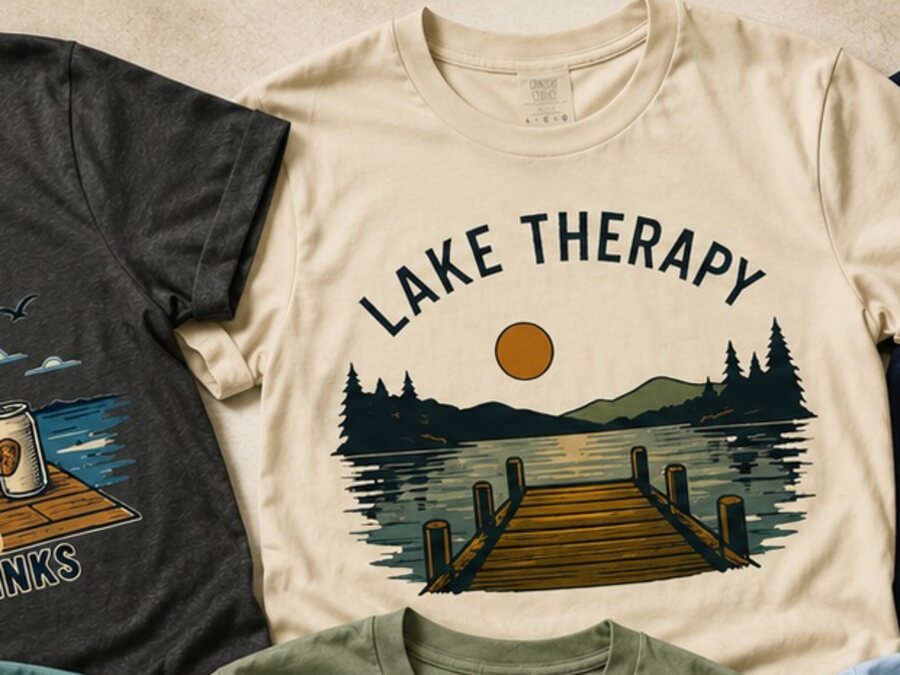
Every candidate is reviewed on actual garment colors. Contrast, print scale, safe area, and placement are production decisions, but they are also design decisions. The same image can feel balanced on one color and strangely detached on another.
We keep the combinations that feel intentional and remove the ones that only work in a design file.
People make the final calls
Tools help us explore, compare, clean, resize, and validate. They do not decide what deserves to exist. Concepts, artwork, copy, mockups, and products each pass through human review before advancing.
That friction is useful. It keeps production efficiency from becoming an excuse to publish everything.
Collections are allowed to sound different
ShirtShirt is the neutral frame. Each collection owns its own voice and visual world. Drift & Dock can be relaxed, waterfront-minded, and sun-faded without making every future ShirtShirt collection sound like it lives beside a lake.
The common rule is not a theme. It is specificity.